Guestlist Ticket
A modern concierge platform for nightlife, services, and experiences.
Drag to rotate
Guestlist Ticket is a concierge platform that curates Bali's nightlife, experiences, and private services into one place — delivered as a web app, native mobile apps for guests and for partners, and an internal back office that ties it all together. I joined as Lead Front-End Engineer and carried the product from problem to interface across every surface — defining solutions, designing in Figma, and building fast, polished experiences in Next.js and React Native while leading a team of five engineers through more than three major redesigns. Today I work full-stack: alongside the front end, I build features on the back end in Go with the Gin framework.
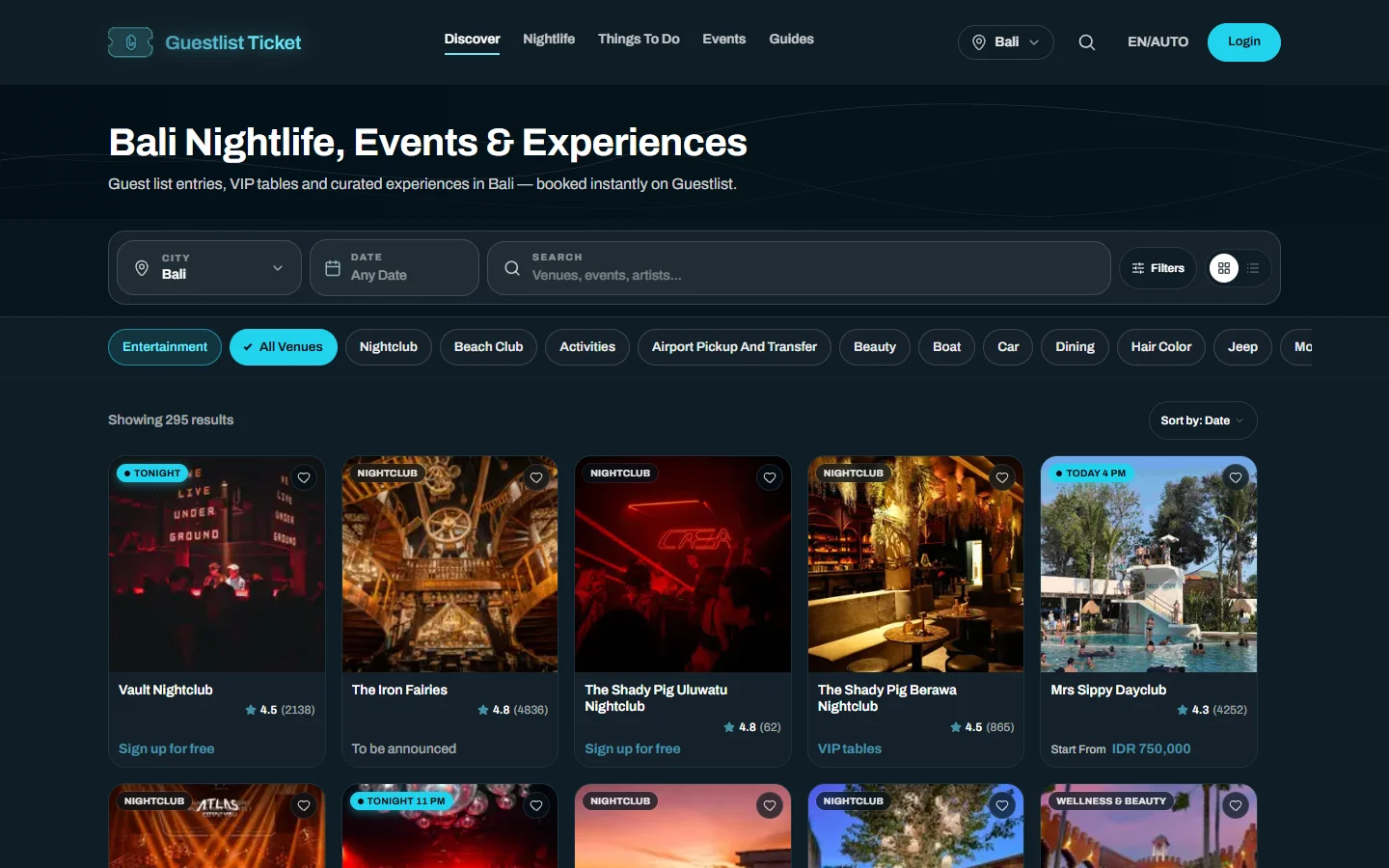
Discovery that starts with where you are
Each city gets its own landing page. Guests pick a destination once, then a single bar combines city, date, and search, with category chips and filters underneath. Live badges such as Tonight or Today 4 PM surface what is happening right now across hundreds of venues, so the catalog feels curated instead of overwhelming.
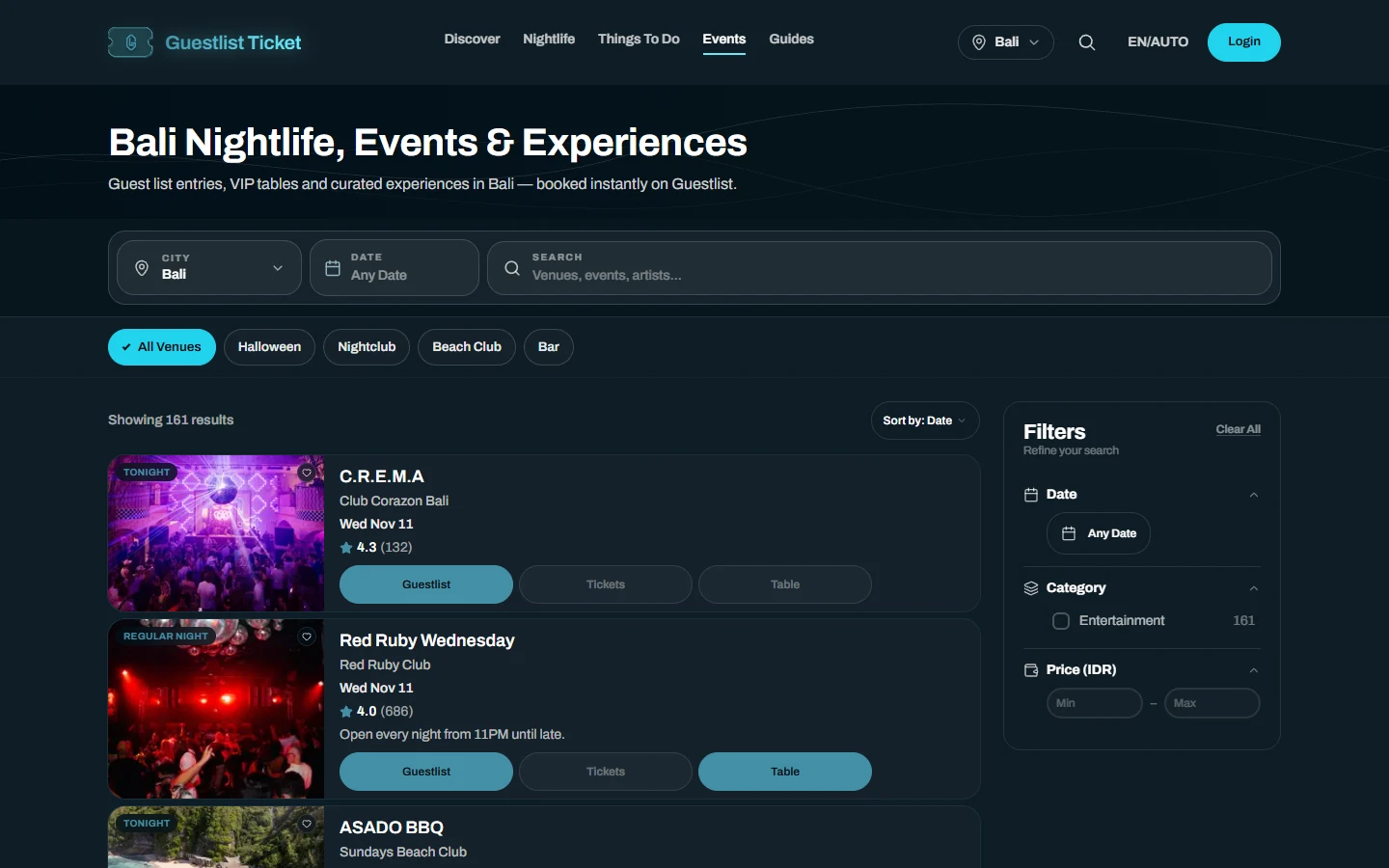
An events calendar built for tonight
The Events page lists every night across 160+ events in a dense, scannable list. Guests filter by date, category, and price range, sort by date, and jump straight to the right action on each row: Guestlist, Tickets, or Table. One reusable component keeps the list fast and readable as more partners come on board.
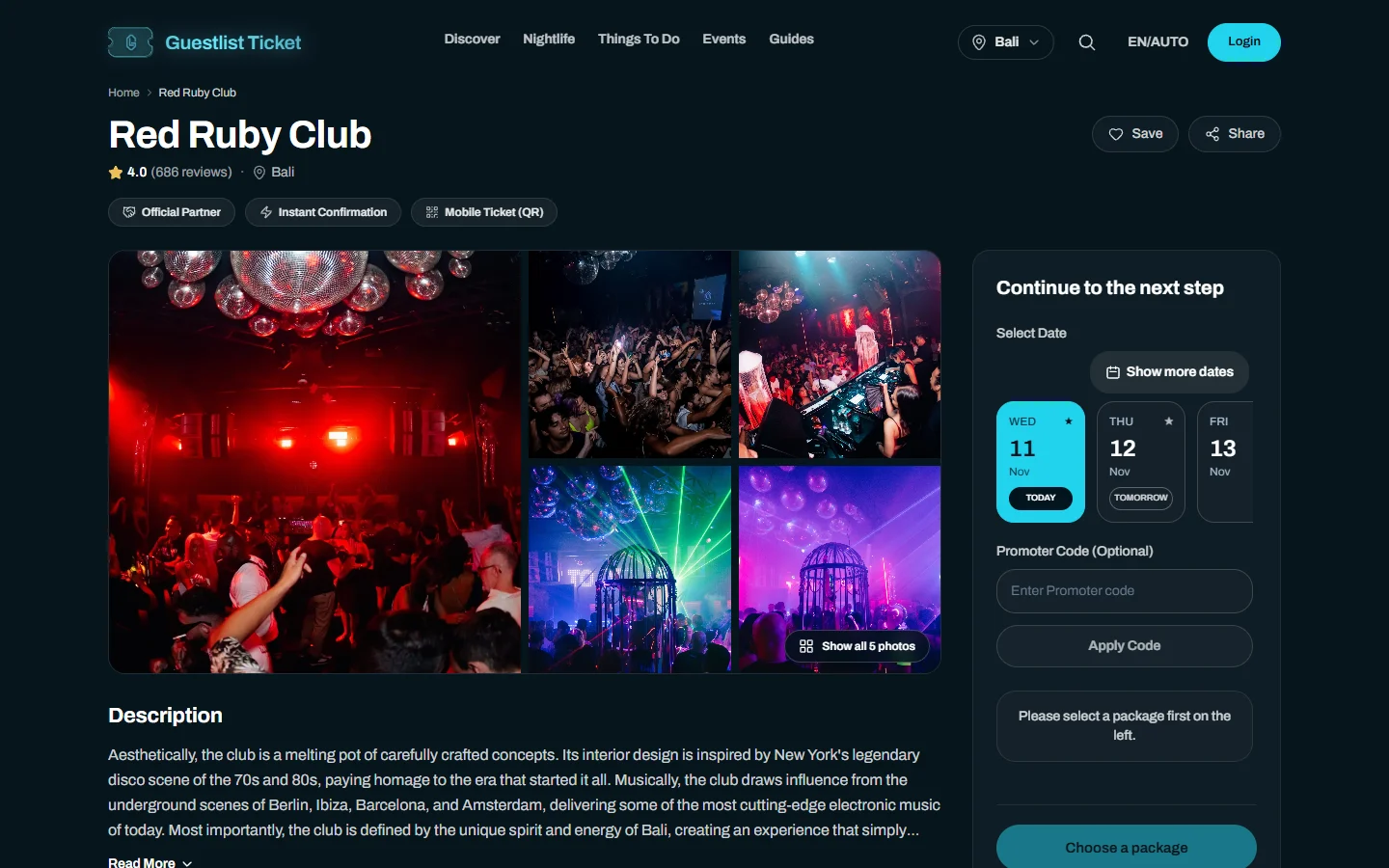
A booking flow that handles real-world complexity
Venue pages bring together a photo gallery, trust badges (Official Partner, Instant Confirmation, Mobile Ticket), a live date strip, packages, and optional promoter codes, all wired to live data through React Query. The booking panel stays pinned beside the content, so a complex, stateful flow feels calm and guided from first glance to checkout.
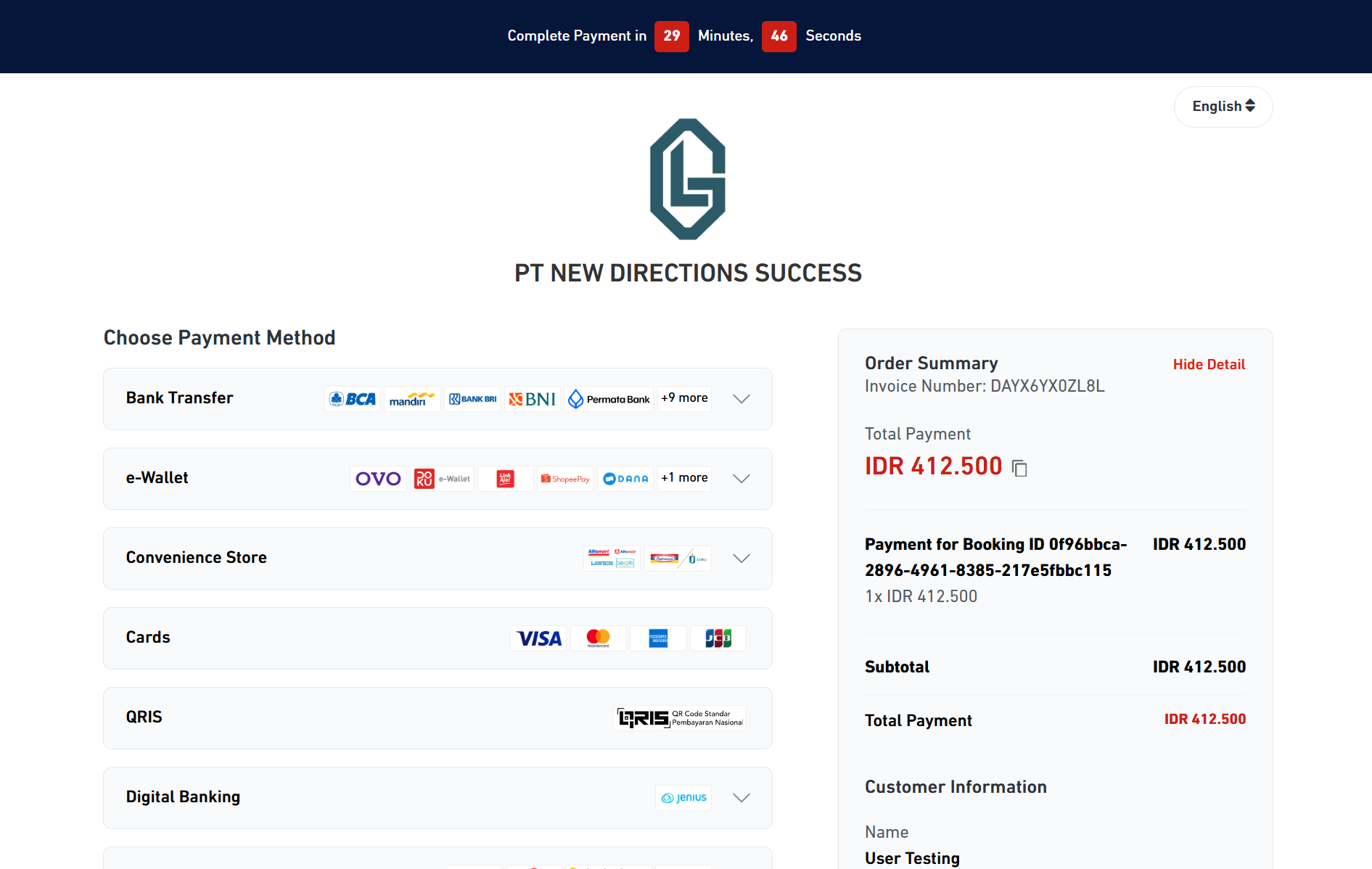
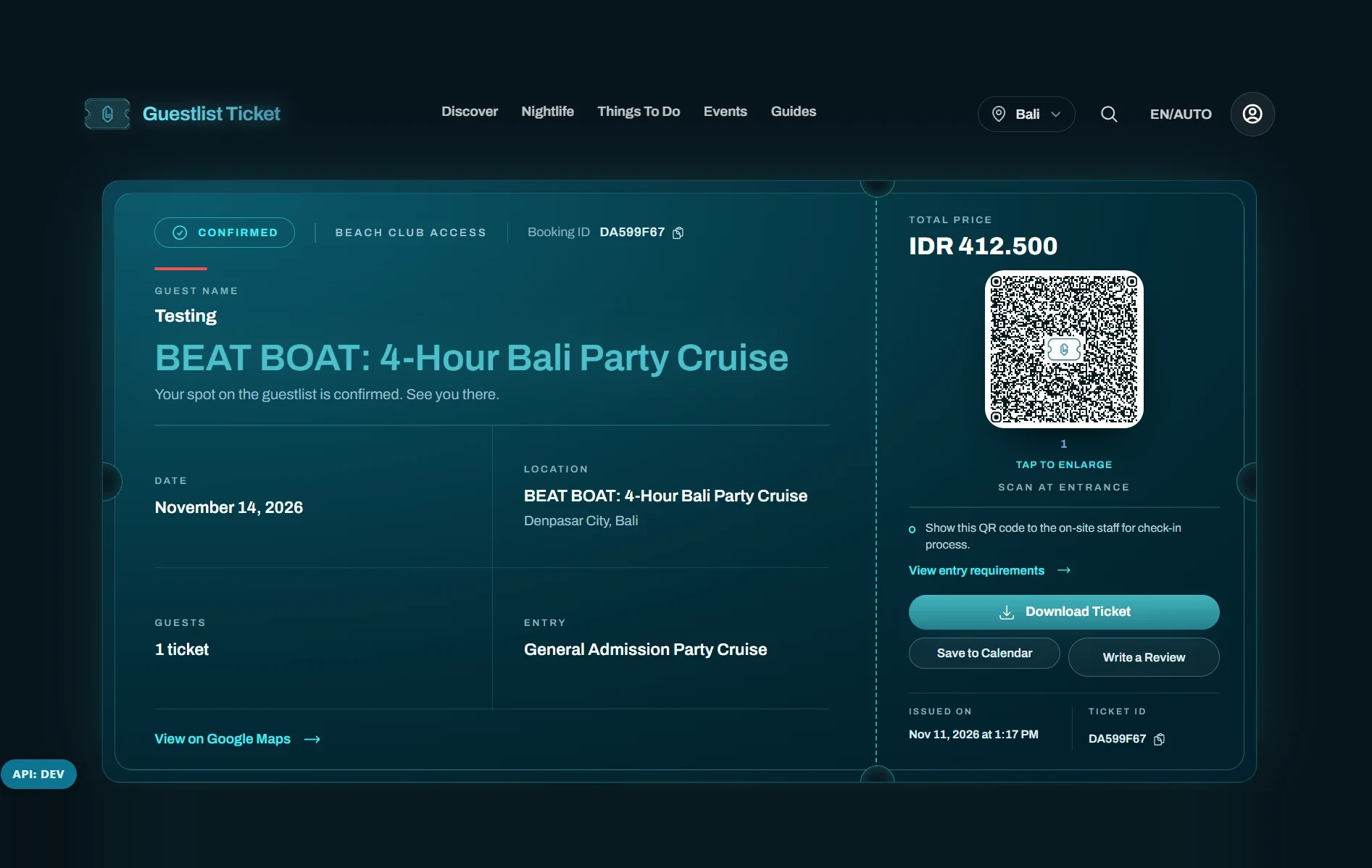
From payment to a ticket in the guest's hand
Checkout integrates a payment gateway covering bank transfer, e-wallets, QRIS, cards, and more — complete with a countdown and a live order summary. Once paid, guests receive a confirmed e-ticket with a scannable QR code they can download, closing the journey end to end.
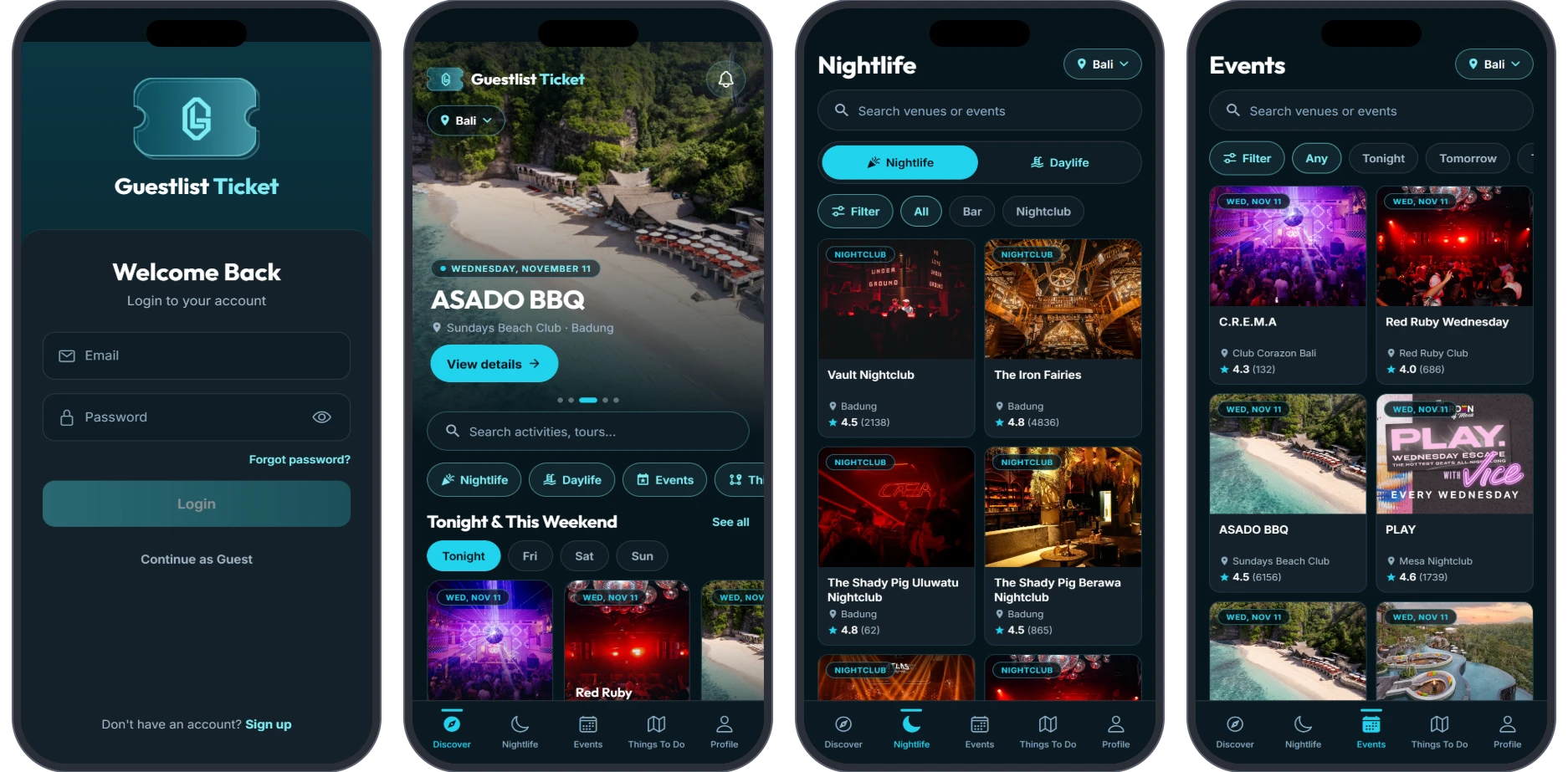
The full Guestlist, native on every phone
The guest experience is built for iOS and Android in React Native, mirroring the web journey end to end in a dark, nightlife-first design. Guests sign in or continue as a guest, land on a Discover feed with a featured-event carousel and a Tonight & This Weekend switcher, then move between Nightlife, Events, and Things To Do from a persistent tab bar, all with the same live catalog and booking flow as the web.
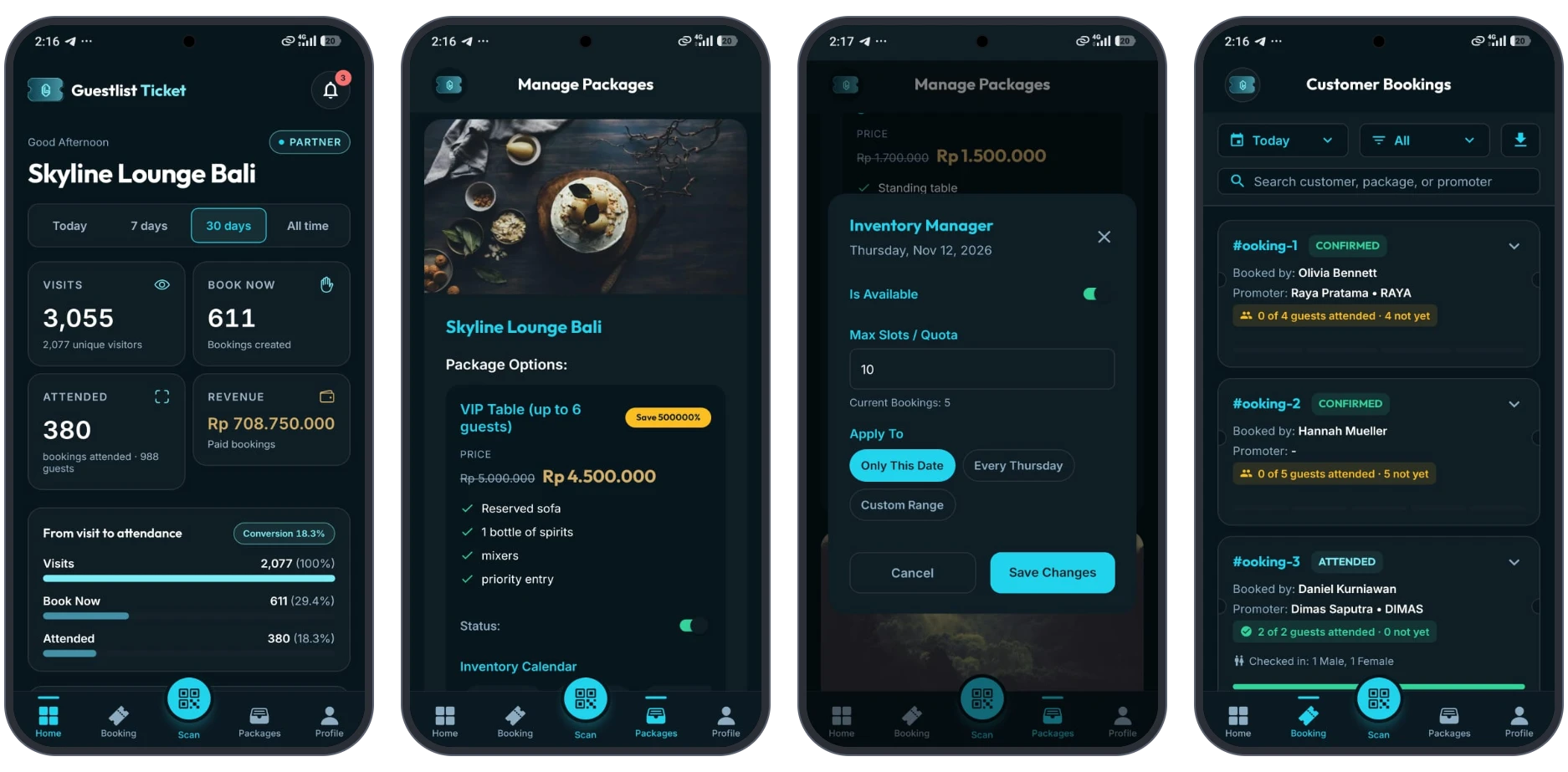
Partner app: run the venue from your pocket
Venue partners get a React Native app built around the night. A live dashboard tracks visits, bookings, attendance, and revenue with a visit-to-attendance funnel; a central Scan button checks guests in at the door; the bookings list shows each reservation with its promoter and check-in progress; and an inventory manager sets package availability and quota per date, every Thursday, or over a custom range.
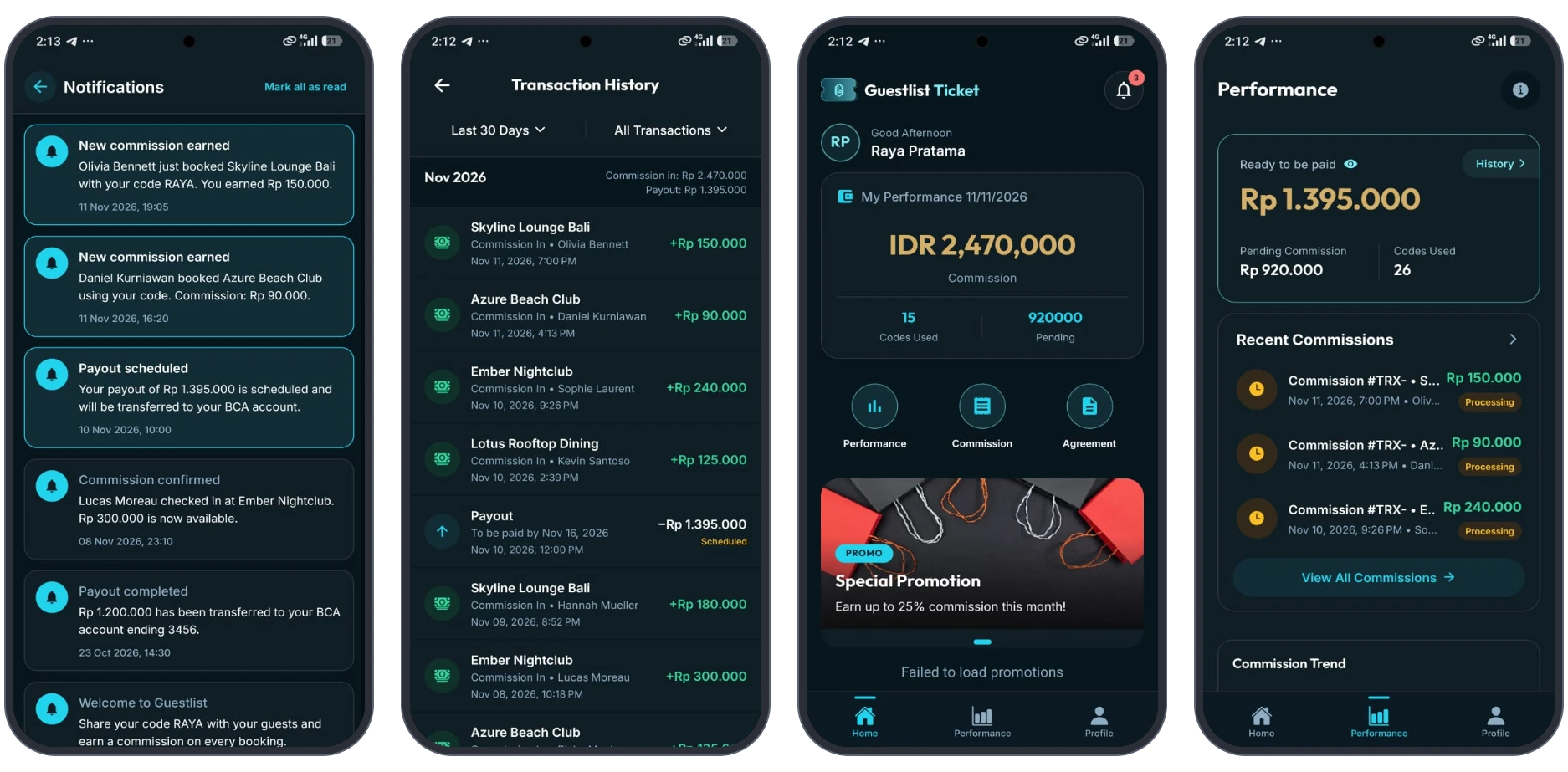
Promoter app: earn on every booking
Promoters get a wallet-style home that shows commission earned, codes used, and pending payouts at a glance. A performance tab tracks what is ready to be paid and recent commissions as they process, transaction history lists every commission in and payout out by month, and push notifications announce each new commission, scheduled payout, and confirmed check-in.
One back office, four roles, twenty-plus modules
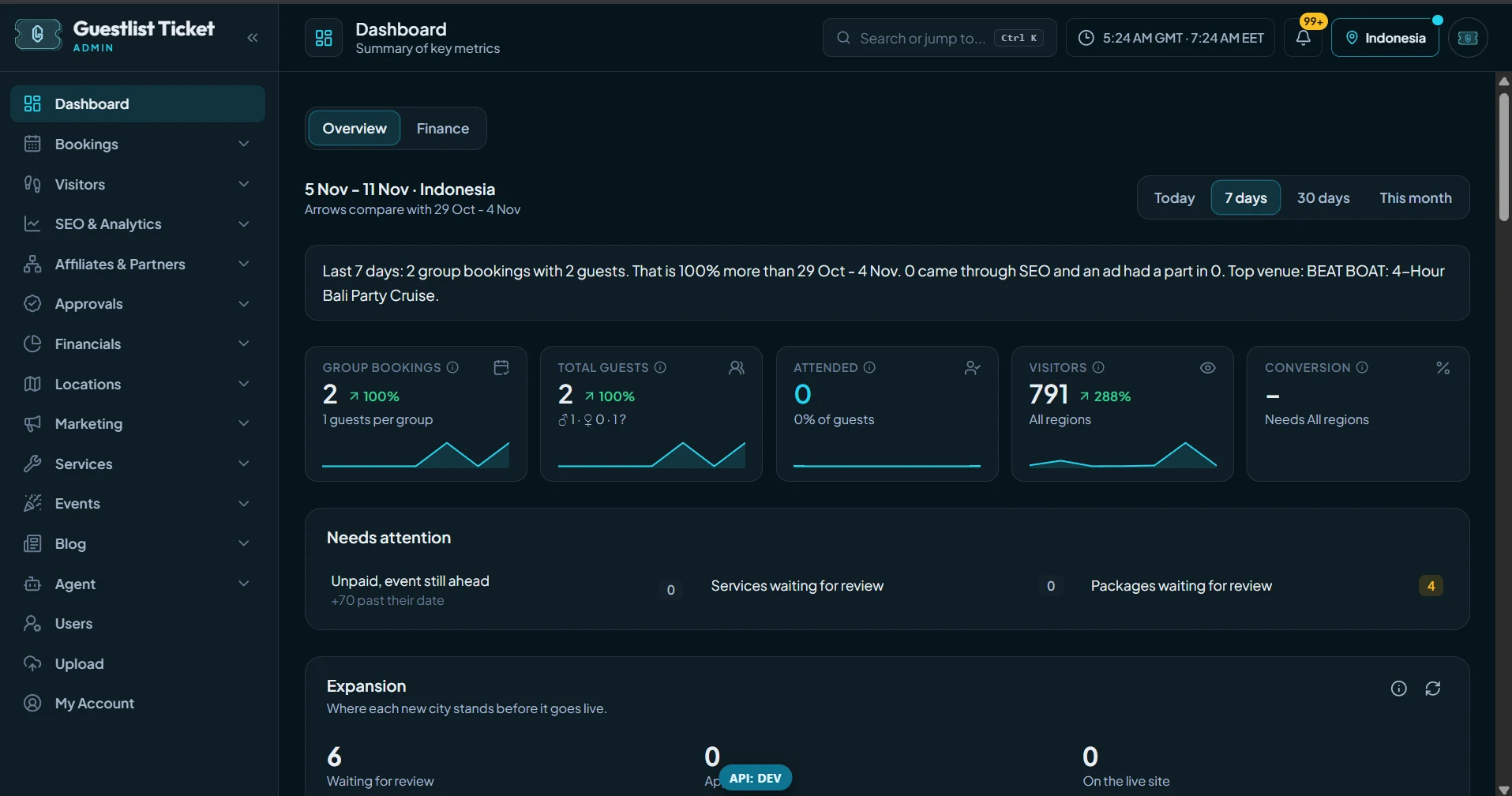
Everything above is run from the Guestlist Back Office — a single admin dashboard with one login serving four roles: admin, sales, partner, and promoter. More than twenty modules sit behind the sidebar, from bookings, services, and locations to financials, approvals, marketing, affiliates, and users. The home view distills the whole operation into KPIs and live charts — orders, revenue, category share, and booking trends — so each team sees exactly the slice of the business it owns.
My role
- 01Defined solutions to product problems with the PM, CTO, and design team
- 02Designed the interface in Figma, then turned it into production UI
- 03Sliced the UI and integrated 20+ APIs from the back-end team
- 04Extended the product to native iOS and Android with React Native — guest, partner, and promoter apps
- 05Built the Guestlist Back Office — one dashboard, four roles, and 20+ modules
- 06Led, delegated, and reviewed the work of five front-end engineers
- 07Now full-stack: building back-end features in Go with the Gin framework alongside the front end
- 08Coordinated daily with Back-End, QA, Design, and Product
One product language across four surfaces
Guestlist isn't one app but four — a web platform, two React Native apps, and an internal back office — and my job on the front end was to keep them feeling like one product. Shared patterns, components, and a single visual identity carry from the website into the guest and partner apps and the admin dashboard, so a guest, a promoter, and an internal operator all meet the same Guestlist no matter where they touch it.
A reusable system, not just screens
With more than three major redesigns over the project's life, the front end had to absorb change cheaply. I built it as a typed component system in Next.js, TypeScript, and Tailwind, so new pages, services, and flows ship from shared building blocks — keeping the product cohesive as it kept evolving.
Fast, multilingual, and ready to scale
Data-heavy pages stay responsive across devices through React Query caching and careful component boundaries, while a built-in language layer serves both local and international guests. The result is a platform that feels quick and effortless — and that the team can keep extending well beyond launch.